
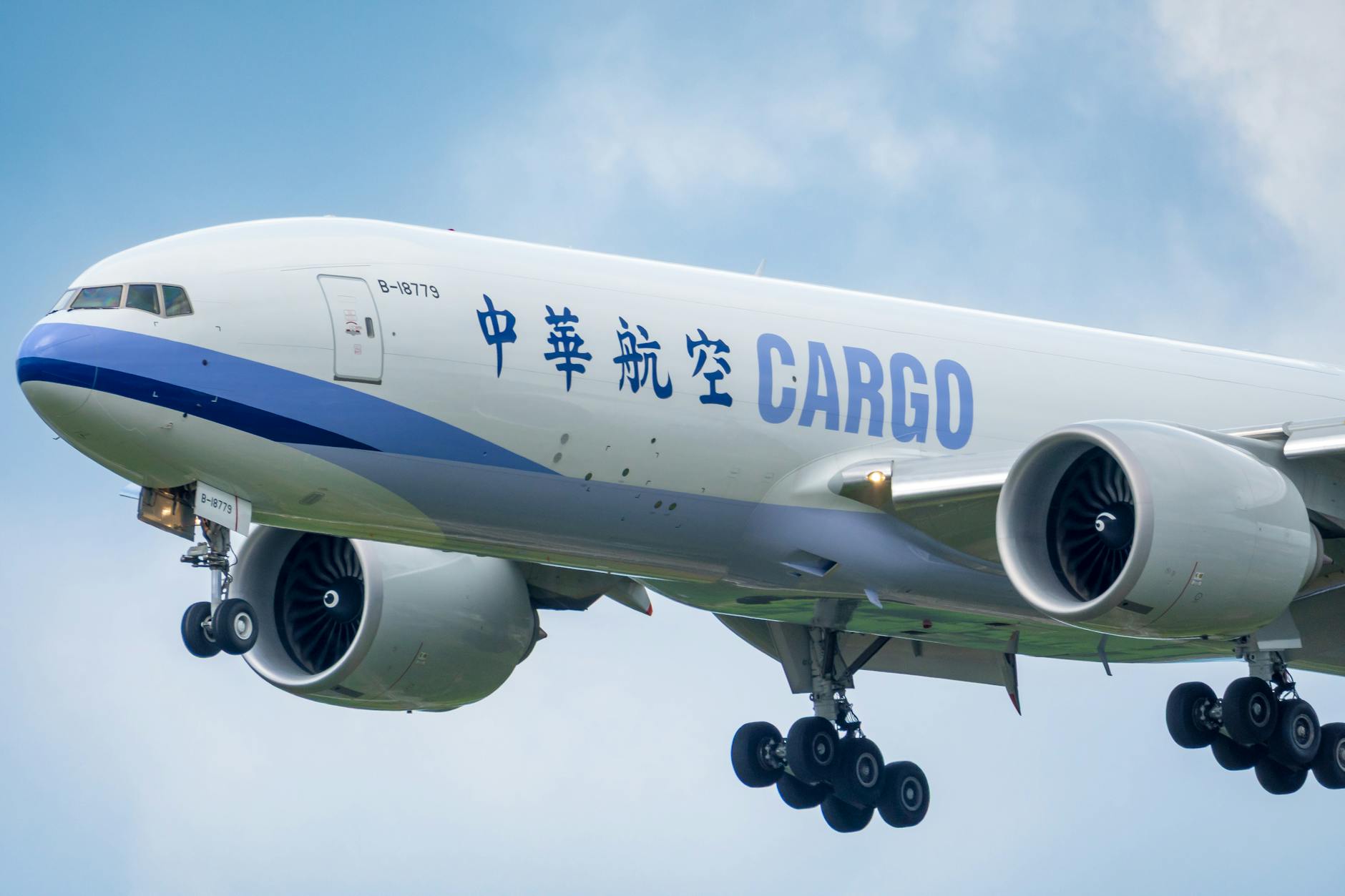
For the first time in 14 months, global air cargo capacity has gone backwards. Industry data released in the first half of April 2026 shows worldwide available tonne-kilometres (ATKs) have slipped roughly 1% year-on-year, breaking the steady expansion that carried the sector through 2024 and 2025. The driver is not soft demand — it is disruption. Escalating tensions across the Middle East have forced carriers to reroute around Iranian, Iraqi and parts of Gulf airspace, adding flight time, burning more fuel, and taking aircraft out of the schedule faster than they can be replaced.
What actually happened in early April 2026
The story is a collision of three factors that arrived at the same time:
- Airspace closures and reroutes. Widebodies between Europe and Asia that used to overfly Iran and parts of the Gulf are now looping further north through Central Asia or south via the Arabian Sea. A typical Frankfurt–Singapore run has added 30 to 90 minutes of flight time, and round-trip block hours on some Hong Kong–Europe lanes are up 3–5%.
- Jet fuel price shock. Jet A-1 has more than doubled since late February following renewed Iran-linked tensions, and Platts jet fuel benchmarks briefly hit record highs in March. Fuel now accounts for 35–45% of direct operating cost on long-haul freighter routes, up from 25–30% a year ago.
- Capacity discipline on the belly side. Passenger carriers are not rushing to add frequencies into the affected regions, which reduces the belly capacity that normally absorbs overflow from freighter networks. The Baltic Air Freight Index jumped 5.1% in the week ending 6 April, pushing year-on-year rate growth to 15.8%.
Average global air cargo spot rates reached USD 2.98 per kilogram — the highest reading of 2026 so far. China → Europe and China → United States trunk lanes surged close to 30% above the same week in 2025.
Which lanes are feeling the biggest squeeze
| Lane | April 2026 rate (USD/kg) | YoY change | Capacity pressure |
|---|---|---|---|
| China → Europe | 5.20 – 6.80 | +28% | Severe — reroutes + fuel |
| China → United States | 6.10 – 7.90 | +29% | Severe — de minimis churn |
| India → Europe | 4.60 – 5.80 | +22% | High — Gulf reroutes |
| Gulf → Europe | 4.20 – 5.40 | +18% | High — direct impact |
| Intra-Europe | 1.80 – 2.60 | +6% | Moderate — fuel pass-through |
| Transatlantic (EU → US) | 3.40 – 4.50 | +11% | Moderate — capacity stable |
India and Gulf-linked corridors are facing the most persistent pressure because they sit directly inside the rerouting arc. A Mumbai → Frankfurt flight that used to take 8 hours is now frequently quoted at 9–10 hours; extra fuel, extra crew, fewer rotations per week.
Why this is different from previous rate spikes
Air freight has seen plenty of rate shocks in the last few years — Red Sea displacement in 2024, Lunar New Year swings, pandemic-era capacity collapses. This one has a different signature:
- It is supply-led, not demand-led. IATA reports air cargo demand rose 5.6% in January and 11.2% in February 2026 — healthy but not extraordinary. What has changed is available capacity, and that is a harder problem to fix because you cannot “just reroute” if the detour adds fuel that is already pricing at record highs.
- Fuel has replaced capacity as the top cost driver. Analysts at IATA and Freightos now point to jet fuel — not supply/demand imbalance — as the single largest factor behind the April rate increases. That means the fix is geopolitical, not operational.
- Yields, not volumes, are the story for airlines. Carriers are publicly stating they will prioritise contracted, high-yield cargo (pharma, high-value electronics, premium e-commerce) over spot general cargo. Spot shippers are the ones being bumped.
Practical steps for shippers right now
- Book 5–7 days ahead as a new baseline. Same-day and next-day bookings for general cargo are increasingly being rolled, especially on Asia → Europe. Pharma and express cargo still clear fast; everything else needs lead time.
- Split shipments across multiple carriers. Putting a single 2-tonne consignment on one AWB creates a single point of failure. Splitting across two or three carriers (emirates-skycargo/">Emirates SkyCargo + Qatar Airways Cargo + Cathay, for example) dramatically reduces roll risk.
- Lock 30-day rate commitments where you can. Spot is the most volatile part of the market. If you have predictable monthly volume, a short 30-day BSA (block space agreement) even at a small premium protects you from the next fuel spike.
- Consider transshipment via Istanbul, Doha or Dubai. Several Gulf hubs have added capacity precisely because they sit inside the rerouting arc. A two-leg routing through IST or DOH can beat a single-leg “direct” that is actually flying a 10-hour detour.
- Revisit the air-vs-sea boundary. At USD 6+/kg China → Europe, the breakeven against sea + expedited first-mile shifts meaningfully. Non-urgent goods should be re-tested against ocean express (25–30 day) options.
How long will this last?
The honest answer: no one knows, because the driver is geopolitical. Analysts are split. Flexport’s global airfreight lead has flagged a low-single-digit demand increase for full-year 2026 with gradually rising capacity, which should put downward pressure on rates in H2. IATA continues to project 2.6% volume growth and 2.4% capacity growth for the full year, implying the current squeeze should ease before peak season.
The consensus working view among forwarders we speak to: expect elevated rates through Q2 2026, modest relief in Q3 if the Middle East picture stabilises, and a potentially sharp capacity correction heading into October if fuel retreats and grounded freighters return to service.
Frequently Asked Questions
By how much has global air cargo capacity actually dropped?
Industry data from the first half of April 2026 shows worldwide available tonne-kilometres are approximately 1% lower year-on-year — the first contraction since early 2025. The drop is concentrated on Asia-Europe and Gulf-linked lanes where rerouting has added flight time.
Why are jet fuel prices so high in April 2026?
Jet A-1 has more than doubled since late February following Iran-linked tensions. Benchmark Platts jet fuel prices hit record highs in March. Fuel now represents 35–45% of direct operating cost on long-haul freighter routes, versus 25–30% a year ago, and fuel surcharges (FSC) on most carriers have risen to 20–28%.
Are rates going to keep rising?
Most analysts expect elevated rates through Q2 2026. IATA’s full-year forecast of 2.6% volume growth vs 2.4% capacity growth implies the market should loosen in the second half, but only if Middle East airspace normalises and fuel prices retreat from March peaks. Peak season (October–January) remains a wildcard.
Which routes are least affected by the disruption?
Intra-European and transatlantic (EU → US) lanes are the least affected because they do not require overflight of the impacted airspace. Rates on these corridors are still up year-on-year because of global fuel pass-through, but the increases are single-digit rather than the 25–30% seen on Asia-Europe.
Should I switch to sea freight to avoid the surge?
It depends on your cargo. At USD 6+/kg China → Europe, the breakeven against ocean + expedited trucking shifts meaningfully for non-urgent goods. For time-sensitive, high-value, or perishable cargo (pharma, electronics, fashion for peak drops) air remains the right choice — but you should book earlier, split across carriers, and expect roll risk on spot rates. Read our air vs sea comparison.
Is the capacity crunch affecting all carriers equally?
No. Carriers with significant Middle East hub operations (Emirates SkyCargo, Qatar Airways Cargo, Etihad Cargo) are actually well-positioned because their networks are built around the exact hubs that now serve as reroute points. European and US carriers with direct Asia-Europe over-Iran routings are taking the bigger operational hit.
Related reading
- Air Freight Rates Rise Again in April 2026 — What Shippers Need to Know
- IATA Reports 11.2% Air Cargo Demand Growth in February 2026
- Understanding Air Freight Fuel Surcharges: How FSC Affects Your Shipping Costs
- Air Freight Market Update Q2 2026: Rates Stabilize After Spring Surge
- Get an indicative air freight quote
- Use the air freight calculator
Sources: IATA Air Cargo Market Analysis (Jan/Feb 2026); Baltic Air Freight Index; Air Cargo Week — “Global air cargo capacity falls 1 percent”; Stat Times — “Air freight rates surge as fuel costs and capacity pressures rise”; C.H. Robinson April 2026 Freight Market Update.