
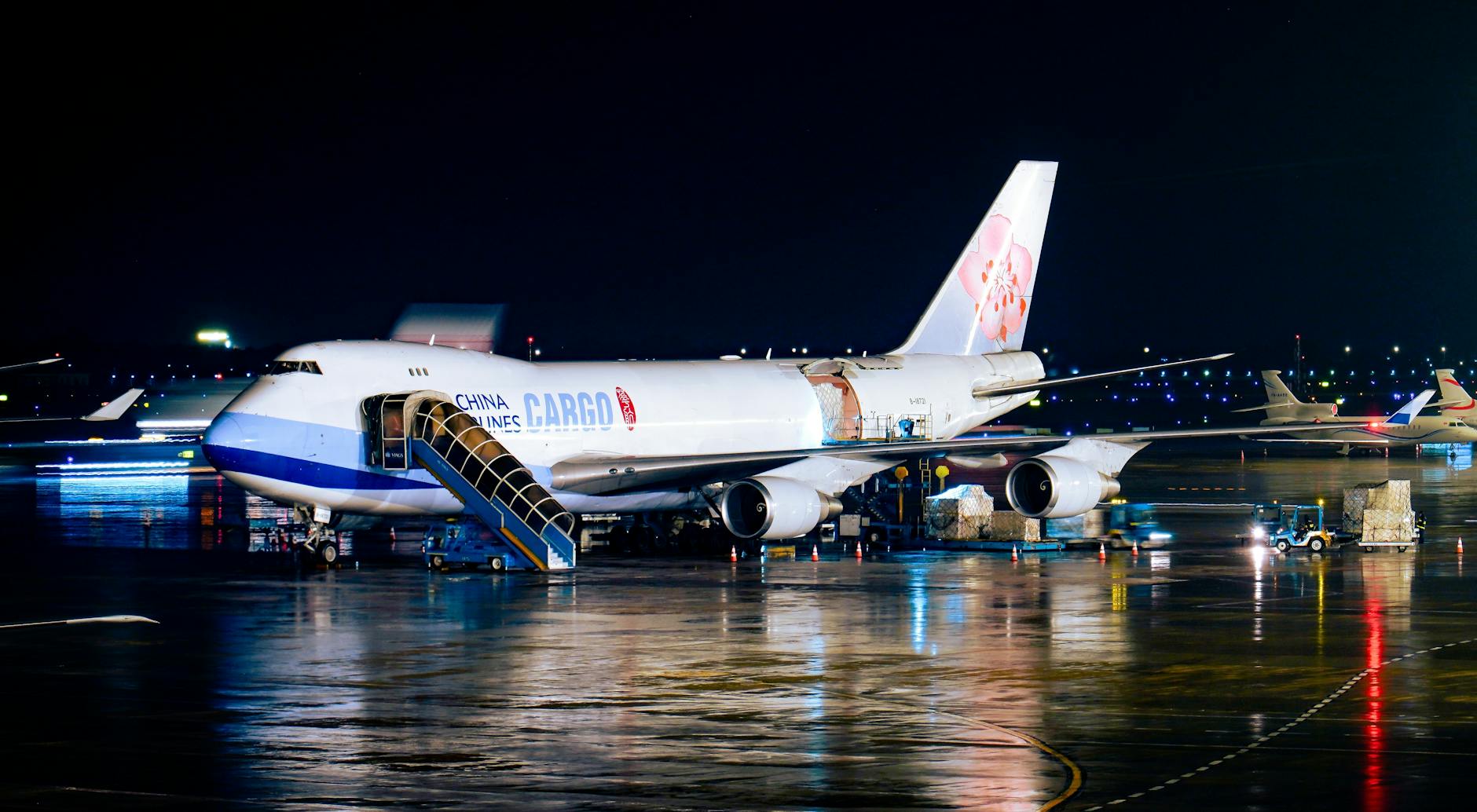
Monday, 20 April 2026 — Weekly Air Cargo Digest. Today’s global air freight market sits at a delicate inflection point: the US-Iran ceasefire announced over the weekend is beginning to ease Middle East airspace pressure, while the fallout from US china tariffs and the end of de minimis treatment continues to redraw global cargo flows. Weekly air cargo rates are still near 2026 highs, but the pace of increase is cooling for the first time in six weeks. Here is what happened over the last 7 days and what it means for shippers this week.
1. Air Freight Rates Today — Weekly Growth Slows After Six-Week Run
Global average air freight rates held near USD 2.98 per kilogram in the week ending 19 April — still the highest reading of 2026, but weekly growth eased to roughly 5% in week 13, down from 10% two weeks earlier. That is the first deceleration since early March. The Baltic Air Freight Index remains up 15.8% year-on-year, but carriers are privately signalling that the top of the spring peak may be in.
| Lane | Rate today (USD/kg) | Week-on-week | Year-on-year |
|---|---|---|---|
| China → Europe | 5.30 – 7.10 | +4% | +75% |
| Air freight China to US | 5.90 – 7.80 | +2% | +20% |
| India → Europe | 4.70 – 5.90 | +5% | +22% |
| Gulf → Europe | 4.00 – 5.20 | -3% | +15% |
| Intra-Europe | 1.85 – 2.65 | +1% | +6% |
| Transatlantic (EU → US) | 3.45 – 4.55 | +2% | +11% |
Notice the China → Europe vs China → US divergence: rates to Europe are up 75% year-on-year while US-bound shipments are only up 20%. The asymmetry is not about demand — it is about US tariff policy pushing Chinese exporters to redirect flow toward European markets.
2. Middle East Update — US-Iran Ceasefire Begins to Ease Capacity
The recent US-Iran ceasefire has begun to ease some capacity pressure on long-haul lanes. However, a full recovery of air cargo capacity through Gulf hubs is expected to take several months, not weeks. The reasons:
- Insurance underwriters moving slower than airspace. Even where airspace has reopened, war-risk insurance premiums remain elevated, discouraging carriers from immediately restoring over-Iran routings.
- Crew scheduling inertia. Rosters built around 30–90 minute detours do not flip back overnight. Expect a 4–6 week normalisation curve.
- Fuel hedges locked in at high prices. Some carriers hedged jet fuel near March peaks — those costs flow through into April and May FSC regardless of spot fuel movements.
The start of the summer scheduling period in April will gradually add capacity, but analysts warn that ongoing Middle East instability remains the dominant influence on both demand and pricing. Any return of tensions would immediately reverse this week’s rate cooling.
3. China Tariffs & De Minimis — The Structural Shift Continues
Today’s air cargo market cannot be understood without the tariff picture. Key developments from the past week:
- US temporary 10% import surcharge remains in effect, layered on top of existing China-specific tariffs.
- Multiple Section 301 investigations are active. Analysts expect further tariff actions, import restrictions or stricter compliance requirements before Q3.
- De minimis fallout intensifying. Chinese e-commerce sellers are visibly pivoting away from the US market: more than 60% of surveyed large sellers have shifted at least part of their fulfilment toward Europe, Mexico or Southeast Asia in the last 90 days.
- China’s air cargo exporters are now openly favouring Europe. The air freight market out of China is shifting away from the US in favour of Europe as a direct result of Washington’s trade and tariff policies.
- Transpacific capacity redeployment. Airlines are further reducing exposure to transpacific lanes, with the strongest capacity growth now concentrated on Asia–Europe and Asia–Middle East.
For shippers still relying on air freight from China to the US, the practical impact is clear: slower clearances due to 100% formal-entry volume surge, more documentation scrutiny, and a widening price gap versus Europe-bound competitors.
4. Fuel Surcharge Update — FSC Stays Elevated at 20–28%
Fuel surcharge remains the single biggest cost component above base rate today. Aviation fuel benchmarks are still running close to 100% above year-ago levels, and most major carriers have kept their published FSC in the 20–28% range for April shipments. Key data points this week:
| Carrier | April 2026 FSC | Change vs March |
|---|---|---|
| lufthansa-lh-air-freight-cargo/">Lufthansa Cargo | 27% | +2 pts |
| emirates-skycargo/">Emirates SkyCargo | 22% | Unchanged |
| Cathay Pacific Cargo | 24% | +1 pt |
| Qatar Airways Cargo | 23% | +1 pt |
| FedEx Express | Dynamic (weekly) | Up ~3% avg |
| DHL Aviation | Dynamic (weekly) | Up ~2% avg |
Carriers have pivoted to weekly FSC updates instead of monthly — a direct response to fuel volatility. Expect at least one more weekly adjustment before fuel retreats from its March peak. Full FSC breakdown here.
5. Capacity Watch — Structural Freighter Shortage Extends to 2027-2028
Reading through this week’s analyst notes, one theme keeps repeating: the freighter fleet shortage is structural, not cyclical. New freighter deliveries are being offset by aircraft retirements, and the mismatch is likely to persist into 2027-2028.
- E-commerce demand continues to absorb available belly and freighter capacity
- Seasonal summer peak (May–July) will tighten further before easing
- Global cargo capacity is still approximately 1% below last year in absolute ATK terms, even as demand grows
6. This Week’s Shipper Playbook
- Book 5–7 days ahead. Despite cooling rates, capacity priority still goes to contracted volume. Spot bookings are still being rolled on Asia-Europe.
- Watch Europe-bound rates more than US-bound. Europe is where Chinese capacity is being redirected — expect Europe corridors to tighten and US corridors to soften over the next 30 days.
- Re-run your landed cost model monthly, not quarterly. With weekly FSC changes and moving tariff picture, a Q1 landed cost assumption is already stale.
- Confirm HS codes and declared values. De minimis fallout means formal entries are now the norm on China → US — any mis-declaration triggers holds.
- Split shipments across two or three carriers for anything > 500 kg and time-sensitive. Single-AWB = single point of failure.
- Use the calculator before you commit to POs. Our air freight calculator gives indicative costs with current April 2026 data; request a precise quote for anything above 300 kg.
Weekly Summary — What Matters Most This Week
| Theme | Status | What changed this week |
|---|---|---|
| Rates | Still elevated | Weekly growth slowed from 10% → 5% |
| Fuel / FSC | Elevated | Carriers moved to weekly updates |
| Middle East | Easing | US-Iran ceasefire begins to reduce pressure |
| China tariffs | Structural shift | More China volume redirects to Europe |
| De minimis | Fallout continues | 60%+ of large sellers repositioning fulfilment |
| Capacity | Tight | Structural freighter shortage into 2027-2028 |
Frequently Asked Questions
Have air freight rates stopped rising?
Weekly growth has slowed from roughly 10% to 5% — the first deceleration since early March. Rates are still at 2026 highs (USD 2.98/kg global average) and still up 15.8% year-on-year, but momentum is cooling. A full reversal depends on (a) Middle East stability holding and (b) fuel retreating from March peaks.
How much does China tariff policy affect air cargo today?
Significantly. The US 10% import surcharge and elevated Section 301 tariffs, combined with the end of de minimis on China/HK parcels, have caused more than 60% of large Chinese e-commerce sellers to shift fulfilment away from the US. Air freight China → Europe rates are up 75% year-on-year while China → US is only up 20% — the asymmetry is the tariff story.
When will fuel surcharge come down?
Not immediately. Aviation fuel benchmarks are still roughly 100% above year-ago levels. Most carriers have hedged into elevated prices, meaning April and May FSC stays high even if spot fuel retreats. Realistic timeline: meaningful FSC reduction by late Q2 if Middle East remains stable.
Is the US-Iran ceasefire enough to restore normal capacity?
Not on its own. Airspace access is one piece; insurance premiums, crew rosters and locked-in fuel hedges all need to unwind. Expect a 4–6 week normalisation curve on the aircraft side. Full capacity recovery through Gulf hubs is still months away per current analyst consensus.
Should I shift my air freight from China to sea freight right now?
For non-urgent cargo — maybe yes. At USD 6+/kg on China → Europe, ocean express (25–30 day transit) looks attractive. For time-critical cargo, air still wins, but book earlier and expect roll risk. See our air vs sea comparison.
Where can I get today’s air freight rates for my specific lane?
Use our air freight calculator for instant indicative pricing, or request a precise quote for shipments above 300 kg. Rates are updated weekly to reflect current FSC and capacity conditions.
Related Reading
- Middle East Disruption Drags Global Air Cargo Capacity Down 1%
- De Minimis Is Dead: $22 Billion Tariff Fallout
- Booking Lead Times Stretch to 5-7 Days
- Air Freight Rates Rise Again in April 2026
- Fuel Surcharge Explained
- Air freight calculator
- Request a quote
Sources: CAAS International — “Air cargo rates hit 2026 high”; Stat Times — “Air freight rates surge as fuel costs and capacity pressures rise”; Freight Right TFX weekly update (wk. April 6, 2026); Air Cargo Week — “North American air cargo in 2026: tariffs, tech and a new playbook”; Scan Global Logistics — Middle East security update; Air Cargo News — “Chinese airfreight market faces structural change”; DHL Global Forwarding April 2026 Air Freight Market Update. Rate data: Baltic Air Freight Index, Freightos FAX. Data as of Monday, 20 April 2026.