
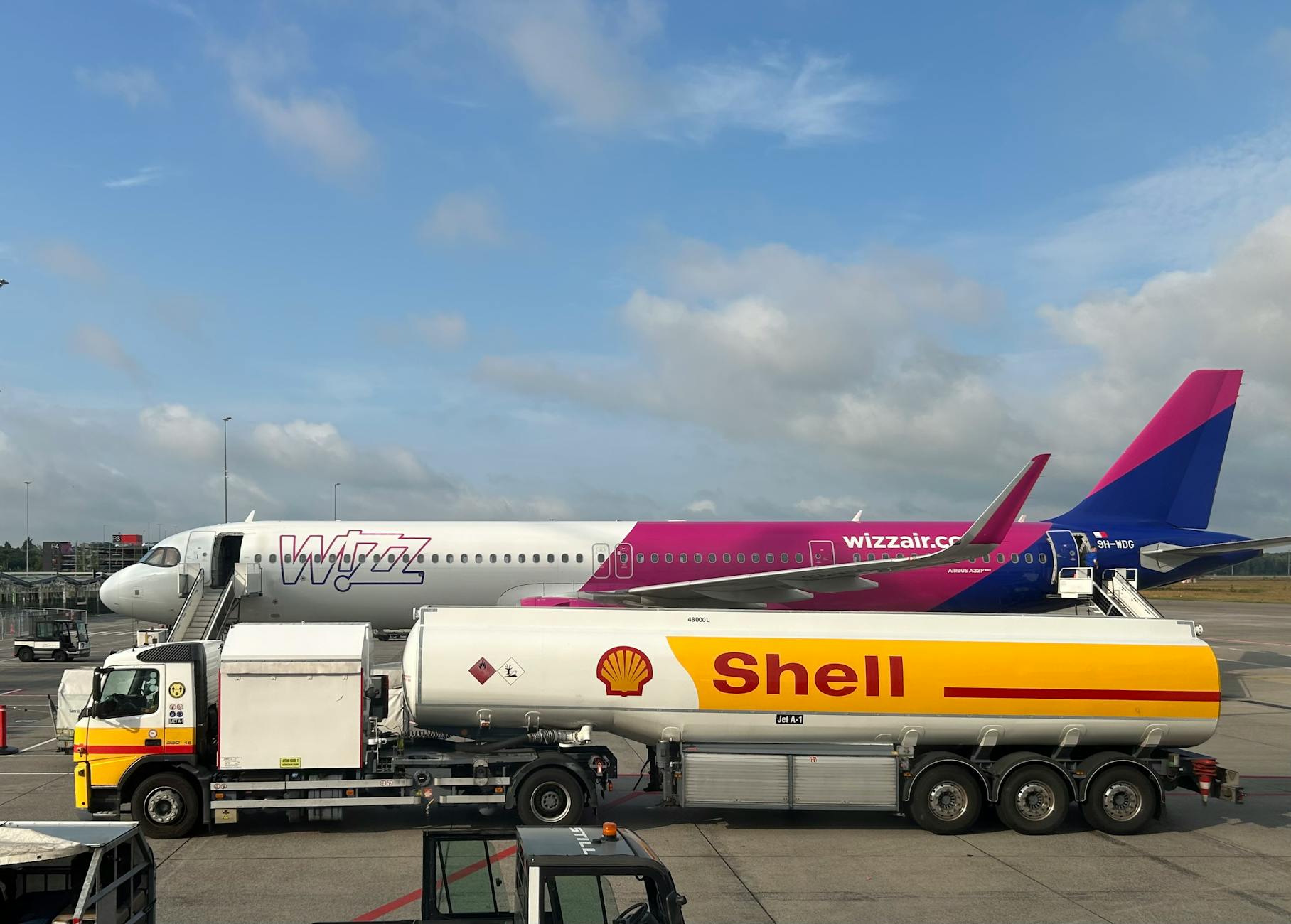
What Is a Fuel Surcharge (FSC) in Air Freight?
A fuel surcharge is an additional per-kilogram fee that airlines add to the base freight rate to cover fluctuating jet fuel costs. Rather than constantly adjusting base rates, carriers use a separate surcharge that’s updated monthly (sometimes weekly) based on the current price of aviation fuel. As of April 2026, fuel surcharges on most trade lanes range from 18% to 22% of the base rate, down from the 25–28% seen in Q1 2026.
How Fuel Surcharges Are Calculated
Each airline publishes its own FSC schedule, typically as a percentage of the base rate or as a fixed amount per kilogram. The calculation is tied to a reference fuel index — most carriers use the IATA jet fuel price monitor or the Platts Singapore/Rotterdam jet kerosene spot price.
Here’s how the math works for a typical shipment:
Example: 200 kg shipment, China to UK, standard service. Base rate: €4.00/kg = €800. Fuel surcharge at 20%: €0.80/kg = €160. Security surcharge: €0.08/kg = €16. Terminal handling: €0.10/kg = €20. AWB fee: €25 flat. Total: €1,021 — the fuel surcharge alone adds €160 to this shipment, representing 15.7% of the total cost.
Current Fuel Surcharge Levels by Carrier (April 2026)
Major carriers are currently applying the following approximate fuel surcharge rates:
Lufthansa Cargo: 19% of base rate (updated monthly). Emirates SkyCargo: $0.75/kg flat on most routes (updated bi-weekly). Qatar Airways Cargo: 20% of base rate (updated monthly). British Airways Cargo: £0.55/kg on European routes, £0.85/kg on long-haul (updated monthly). Singapore Airlines Cargo: 18% of base rate (updated monthly). DHL Aviation: Built into all-in rates — no separate FSC line item.
Note that DHL and some other integrators (FedEx, UPS) include fuel in their base rates rather than breaking it out separately. This doesn’t mean they’re cheaper — the fuel cost is simply embedded in the total price rather than shown as a line item.
How to Minimize Fuel Surcharge Impact
Book when fuel prices dip. Jet fuel prices fluctuate by 10–15% through the year. If your shipment timing is flexible, wait for a month when fuel surcharges drop. Historically, fuel surcharges are lowest in Q2 (April–June) and highest in Q4 (October–December).
Choose economy service. While the surcharge percentage applies equally to all service levels, the base rate for economy service (7–14 days) is 30–45% lower than express. A lower base rate means a lower absolute fuel surcharge. On a China–UK shipment: express at €5.80/kg with 20% FSC = €1.16/kg surcharge, while economy at €3.00/kg with 20% FSC = €0.60/kg surcharge — saving €0.56/kg.
Consolidate shipments. Larger shipments qualify for lower per-kg base rates. Shipping 500 kg at once versus two 250 kg shipments can reduce your base rate by 15–25%, and the fuel surcharge drops proportionally since it’s percentage-based.
Compare carriers. Different airlines have different FSC structures. Some use flat per-kg amounts (better when base rates are high), while others use percentage-based calculations (better when base rates are low). When you request a quote from us, we compare multiple carriers and show you the total cost including fuel surcharges for each option.
Fuel Surcharge Trends and Forecast
Jet fuel prices in April 2026 are averaging $95–$100 per barrel, down from $110–$115 in January 2026. This has allowed most carriers to reduce their fuel surcharge by 3–5 percentage points since Q1. For the remainder of 2026, analysts expect jet fuel to remain in the $90–$105 range, suggesting fuel surcharges will stay at 17–22% through Q2–Q3 before potentially rising in Q4 with seasonal demand.
For a complete breakdown of all cost components in your air freight quote, see our Air Freight Cost Guide or Real-World Cost Examples.
Frequently Asked Questions
Is the fuel surcharge negotiable?
For individual shipments, the FSC is generally non-negotiable as it’s set by the airline. However, for contract customers with regular volumes (typically 10+ tonnes per month), carriers may offer a fixed or capped fuel surcharge as part of a rate agreement. Freight forwarders with large volumes often negotiate preferential FSC terms that they pass on to customers.
Why do some carriers show a fuel surcharge and others don’t?
Integrators like DHL, FedEx, and UPS typically include fuel costs in their all-in base rates rather than listing a separate surcharge. Traditional airlines (Lufthansa, Emirates, Qatar) break it out separately for transparency. Neither approach is inherently better — what matters is the total cost. When comparing quotes, always compare the total all-in price, not just the base rate.
How often do fuel surcharges change?
Most airlines update their fuel surcharge schedules monthly, typically at the beginning of each month. Some carriers (notably Emirates SkyCargo) update bi-weekly. The surcharge for a given month is usually announced 1–2 weeks before it takes effect, allowing shippers to plan. Rates quoted at time of booking are typically honored even if the surcharge changes before the actual shipment date.